Blower Door Test in King Of Prussia, PA
What Is A Blower Door Test?
- Call Us Today
What Our Clients Say
Trustindex verifies that the original source of the review is Google. I recently contacted Local Energy Audits for help with a suspected duct leak. From the start, they asked all the right questions and even requested pictures to better understand the situation. Based on the information I provided, they recommended a specific service, which, surprisingly, they didn't even sell. They didn't charge me anything for their time, and the advice they gave was invaluable-something I hadn't received from anyone else. Their honesty, professionalism, and genuine desire to help really stood out. I highly recommend them if you're looking for expert advice and outstanding service.Posted onTrustindex verifies that the original source of the review is Google. Frustrated with my high electric bills - despite an efficiency drive in lighting and appliances in the house - I suspected that my HVAC was to blame but didn't know where to start. Research suggested an energy audit would be a good place to start, and I am very happy I chose to work with Local Energy Audits. Ori was extremely professional, thorough, and on-time. After the blower door test was set up and running, he walked through every room in the house with me, patiently reviewing all the leaks and explaining possible fixes. The information in his report is invaluable, and I feel infinitely better informed as to how to tackle improving the energy efficiency of my house. Particularly given the new federal tax credits for energy efficiency, I found the price for ~2 hours of Ori's time and expertise, plus the fact that I can now build a plan of attack, to be extraordinarily reasonable. Highly recommend anyone looking for an energy audit to get in touch with them!Posted onTrustindex verifies that the original source of the review is Google. I had called numerous companies and had numerous individuals to our house. No one could figure out the issues. Ori explained everything and fixed the issues. He and his crew are wonderful!Posted onTrustindex verifies that the original source of the review is Google. Chris was a fast and efficient tech. Whole test took less than a half hour from arrival to departure and provided exactly what was needed.Posted onTrustindex verifies that the original source of the review is Google. Great company to work with. Fast, reliable, and most of all professional. Ori walked us through every step of the process and Chris was there to perform the test. Definitely a service we will use again in the future and definitely a company to recommend!Posted onTrustindex verifies that the original source of the review is Google. Great guy! He gave me great advice, wasn’t just after my money.He gave me a genuine feeling of concern and I recommend them.Posted onTrustindex verifies that the original source of the review is Google. Always excellent servicePosted onTrustindex verifies that the original source of the review is Google. Ori was able to work with my schedule and get to my house quickly. He was able to pinpoint areas that need improvement. Easy to work with. Highly recommend.Posted onTrustindex verifies that the original source of the review is Google. When I needed a blower door test Ori was cordial arrived on time and got the job done at a fair price!Verified by TrustindexTrustindex verified badge is the Universal Symbol of Trust. Only the greatest companies can get the verified badge who has a review score above 4.5, based on customer reviews over the past 12 months. Read more
How Is A Blower Door Test Conducted?
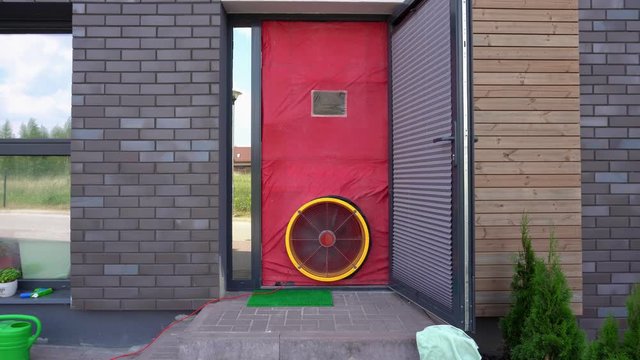
When performing blower door test in King Of Prussia, PA, the technician ensures all exterior doors and windows are sealed and interior doors are open for steady air movement. A central exterior door is used as the setup point, where an adjustable aluminum frame and fabric panel are positioned. Next, a calibrated fan is mounted on the frame to reduce indoor pressure to 50 Pascals — similar to the force of a 20 mph wind on the building.
As the fan removes air from inside, exterior air flows in through leaks and gaps in the building envelope. A precise nanometer instrument allows us to compare the pressure generated by the fan to that within the house. These measurements yield air changes per hour (ACH), showing how airtight and energy-efficient the property is in PA.
What Is A Passing Blower Door Test Score?
Homes built in King Of Prussia, PA are expected to comply with the 2015 International Energy Conservation Code (IECC) or any newer local versions in effect. In most cases, passing the blower door test means reaching 3 air changes per hour or less, proving efficient home sealing. By meeting this standard in your blower door test in King Of Prussia, PA, you can enjoy lower utility bills and peace of mind with code compliance.
Why Do I Need A Blower Door Test?
PA state regulations and many municipalities abide by the IECC, enforcing blower door tests for newly constructed or renovated homes. We often work with home builders, contractors, and homeowners requiring blower door test in King Of Prussia, PA to meet local energy codes and obtain permit approval. You might also need a duct leakage test if HVAC systems or ducts are positioned outside the property’s thermal envelope. Learn more about energy code compliance.
A blower door test in King Of Prussia, PA helps homeowners discover inefficiencies. Depressurizing the home makes leaks more noticeable and highlights where energy can be conserved. A blower door test usually takes just a few hours but delivers a long-lasting impact on your home’s comfort, performance, and efficiency—particularly during PA’ hot summers and cool winters.
How To Pass A Blower Door Test:
- Anticipate potential air leaks before testing begins.
- Install an effective air barrier, for example Tyvek or Zip Sheathing, and make certain all seams are sealed with durable tape.
- Place insulation with the accurate R-value and check for proper installation and full coverage in the building envelope.
- Seal all penetrations in exterior walls using caulk or spray foam.
- Ensure doors and windows are properly installed, caulked, and weather-sealed.
- Close any gaps connecting conditioned and unconditioned spaces, such as those leading to basements, attics, or crawl spaces.
- Many building departments provide step-by-step compliance guides — you can find the Philadelphia example here.
- Our professionals at Local Energy Audits use caulk, spray foam, and thermal imaging to detect and seal leaks on-site for better efficiency./li>
- In more than 90% of cases, we secure a passing score within two hours and deliver the paperwork needed to close the permit.
Preparing for a Blower Door Test in King Of Prussia, PA
Blower Door Test for Contractors in King Of Prussia, PA
When contractors schedule blower door test in King Of Prussia, PA, professionally insulated homes often only need minor adjustments that can be handled during the test. Using materials like chalk and spray foam, small leaks or gaps can typically be sealed right away during the test. In over 90% of cases, we successfully achieve a passing blower door test score within just two hours and promptly deliver all required documentation to close out the building permit without any delay.
- Call Us Today
Schedule Your blower door test in King Of Prussia, PA
Get accurate, efficient, and certified blower door test in King Of Prussia, PA performed by our knowledgeable experts. Whether you’re a homeowner seeking better efficiency or a contractor finalizing a build, we ensure every test aligns perfectly with energy code standards.